

California Fire - What's Changing, What It Means, and How to Stay Ahead
California Fire: What's Changing, What It Means, and How to Stay Ahead
A New Blog Series from Greenwood & Moore
Would it surprise you to hear that in California we average 7.5 - 8k fires a year? And over the last five years, we’ve seen ~39.1k wildfires - carrying an economic toll of $180 - $270 billion in losses.
But fire is a natural part of California, we even refer to “fire season” as part of our regular calendar. The difference now is the pace and scale of what’s changed around it. Over the past two years, laws, maps, building codes, and the insurance market have all shifted in ways that have left many property owners, design professionals, contractors, and facility managers scrambling to keep up.
That’s exactly why we’re launching this next series on the California fire landscape: what’s changed, what it means for you, and how to stay ahead of it.
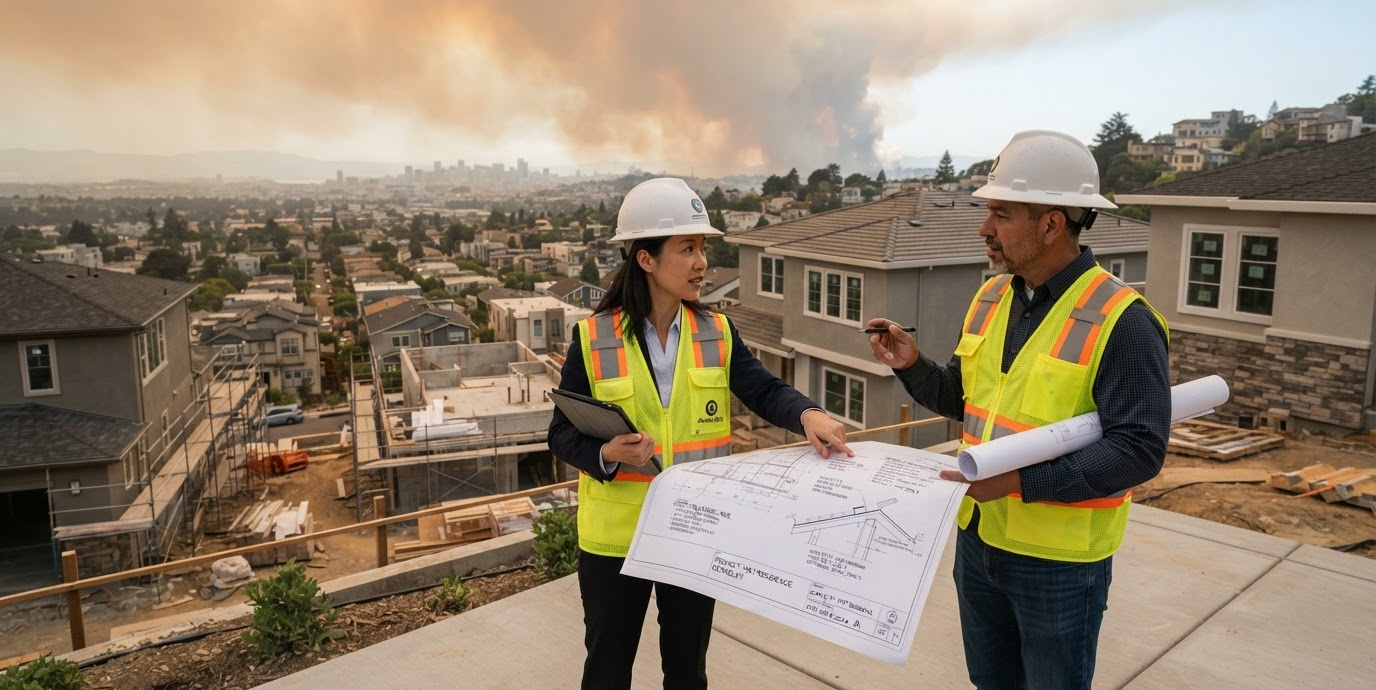
At G&M, we work alongside architects, contractors, homeowners, and facility managers every day on projects that intersect with California’s evolving fire regulations. We see firsthand where the confusion is, where the gaps are, and where, with the right guidance at the start can make all the difference.
Unprecedented: California’s housing codes and laws have made historic shifts and over the past two years, several significant changes have reshaped the fire compliance landscape in California. Driven by the compounding pressures of a chronic housing shortage and the financial fallout from catastrophic wildfires, the state legislature has systematically stripped away many local zoning powers, rewritten tenant-landlord regulations, and radically hardened building codes.
Lets talk about a few of the top shifts:
- Fire Hazard Severity Zone maps
were redrawn. CAL FIRE released updated maps in early 2025, the first major update since 2007. Many properties that
were not previously in a designated fire zone,
now are. These new maps sweep property into newly drawn or elevated hazard zones, and it triggers financial and legal changes.
- A new building code took effect January 1, 2026. The
California Wildland-Urban Interface Code (CWUIC),
Title 24,
Part 7, replaced the longstanding Chapter 7A framework. A complete overhaul of structural safety codes, and for anyone designing or building, the rules have changed, and the new codes are far more comprehensive.
- Defensible space requirements have tightened: New legislation introduced stricter vegetation and buffer zones around structures, including a "Zone 0" buffer immediately surrounding buildings. Enforcement has intensified alongside these changes.
- The insurance market remains under pressure. In California’s current property market, compliance with building codes and wildfire mitigation has transitioned from a matter of local safety to the absolute prerequisite for securing property insurance. Many major insurers have pulled back from California, or exited the state entirely, premiums have risen significantly, and the path to adequate coverage has become very complicated, especially for those of us in in higher-risk areas.
These are just a few of the many topics that we could discuss around California’s fire challenges. Staying informed has never been more important and knowing what the potential issues and new mandates are will arm you as you consider your options in our gorgeous state.
What this blog series will cover:
Over the coming weeks, we'll walk through the above topics and those that matter most. Whether you're a homeowner trying to understand what these changes mean for your property, an architect or contractor working on projects in fire-affected areas, or a facility manager responsible for commercial buildings in or near high-risk zones — this series is for you. Here’s what we’ll be covering:
- Fire zone maps — what they are, what your designation means, and what changes when you're in one
- The new WUI Code — what architects and contractors need to know about designing and building under the updated framework
- Defensible space — what the law now requires around every structure, and what inspectors look for
- Home hardening — the materials, details, and design choices that meet code and protect property
- Insurance — how compliance intersects with coverage, and what options exist in a difficult market
- Rebuilding after fire — permits, code triggers, and how to navigate the process
The first landscape has changed, but Greenwood & Moore is your partner, and we bring deep experience in California fire compliance, building codes, and project support across WUI and fire hazard zones.
If you have any questions or any of these topics are affecting a project or property you’re working on right now, we’re here to help and an easy conversation away. Reach out — we’re here to help.
Since 1994, G&M’s goal is to “Make our Clients' Vision a Reality."